lnxtx (xe/xem/xyr)@feddit.nl to 196@lemmy.blahaj.zoneEnglish · 1 year agoVal(r)u(l)efeddit.nlexternal-linkmessage-square13linkfedilinkarrow-up1117arrow-down18
arrow-up1109arrow-down1external-linkVal(r)u(l)efeddit.nllnxtx (xe/xem/xyr)@feddit.nl to 196@lemmy.blahaj.zoneEnglish · 1 year agomessage-square13linkfedilink
minus-squarebob_lemon@feddit.orglinkfedilinkarrow-up16·1 year agoThe problem is that averaging hue makes no sense at all because hue is not a longest scale. If you take a red poster (0) and a blue poster (240), it averages to green. Or take red (0) and red (359), averaging to cyan (180).
minus-squareflying_sheep@lemmy.mllinkfedilinkarrow-up6·1 year agoThe average of 0° and 359° is obviously 359.5°. it’s a radial scale.
minus-squarebob_lemon@feddit.orglinkfedilinkarrow-up8·1 year agoBy that logic, the average of red and cyan is both purple and lime. Still useless.
minus-squareflying_sheep@lemmy.mllinkfedilinkarrow-up2·1 year agoNot if there is a clear trend. If most movie posters are blue, three average will be blue. But i agree, it is useless if there is no clear trend.


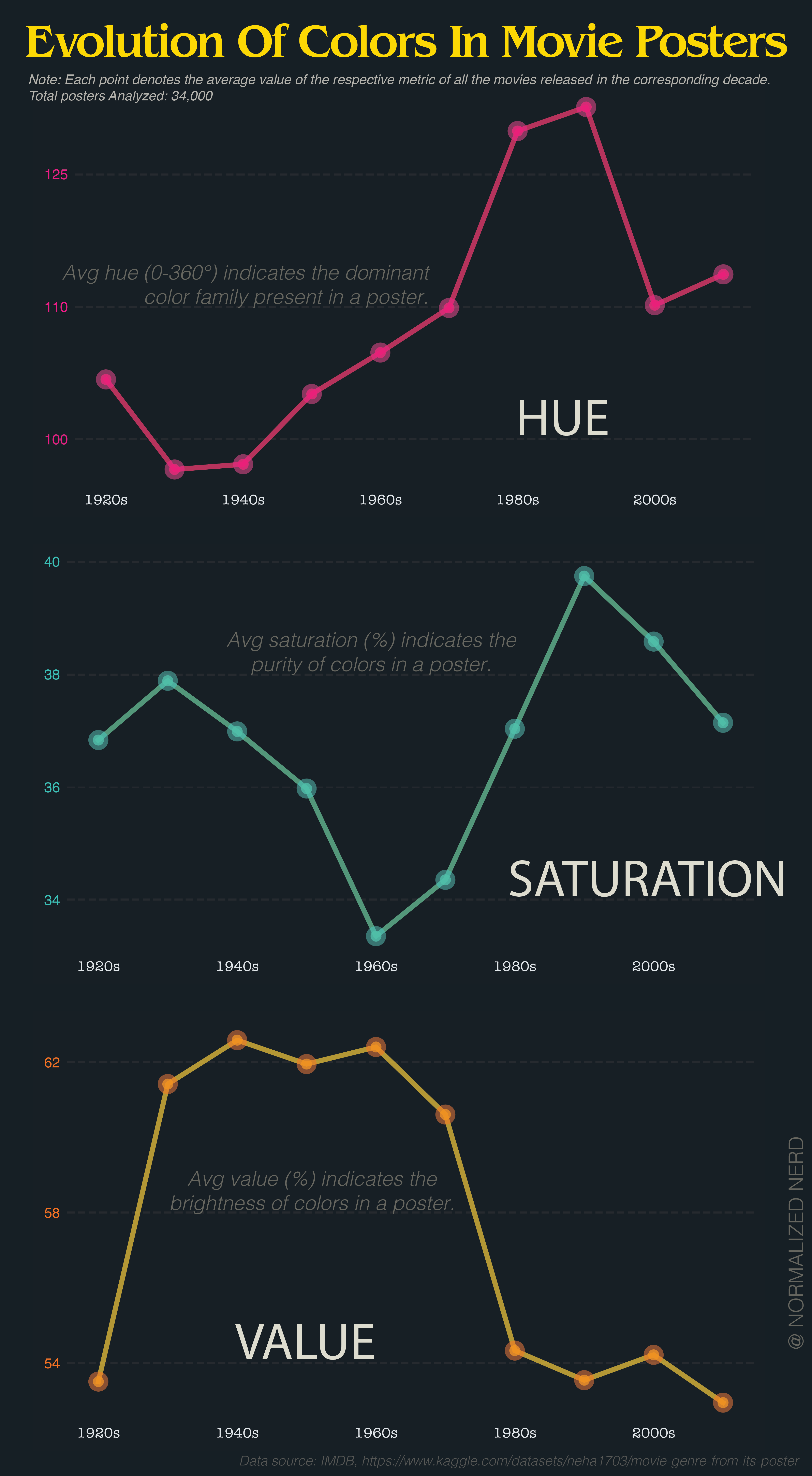
The problem is that averaging hue makes no sense at all because hue is not a longest scale.
If you take a red poster (0) and a blue poster (240), it averages to green. Or take red (0) and red (359), averaging to cyan (180).
The average of 0° and 359° is obviously 359.5°.
it’s a radial scale.
By that logic, the average of red and cyan is both purple and lime. Still useless.
Not if there is a clear trend. If most movie posters are blue, three average will be blue.
But i agree, it is useless if there is no clear trend.
deleted by creator
You know what, I completely agree.
deleted by creator