When you refer to that diagram, is it a way of gauging fire spread risk? Like this grill could start a medium sized fire, and it’s close to a shed which could become big fire, and that could spread to house, etc, etc?
Well that’s pretty cool, thanks for sharing! :D
To repeat to check my understanding, you’re looking at where structures are relative to other structures, their shape and orientation, and how that goes together in a big system to influence general structure survival in a wildfire situation.
Do you foresee the outcome being something where you could “tune” a neighborhood to be more survivable, or would it end up with too many combinations to be viable?


Removed by mod
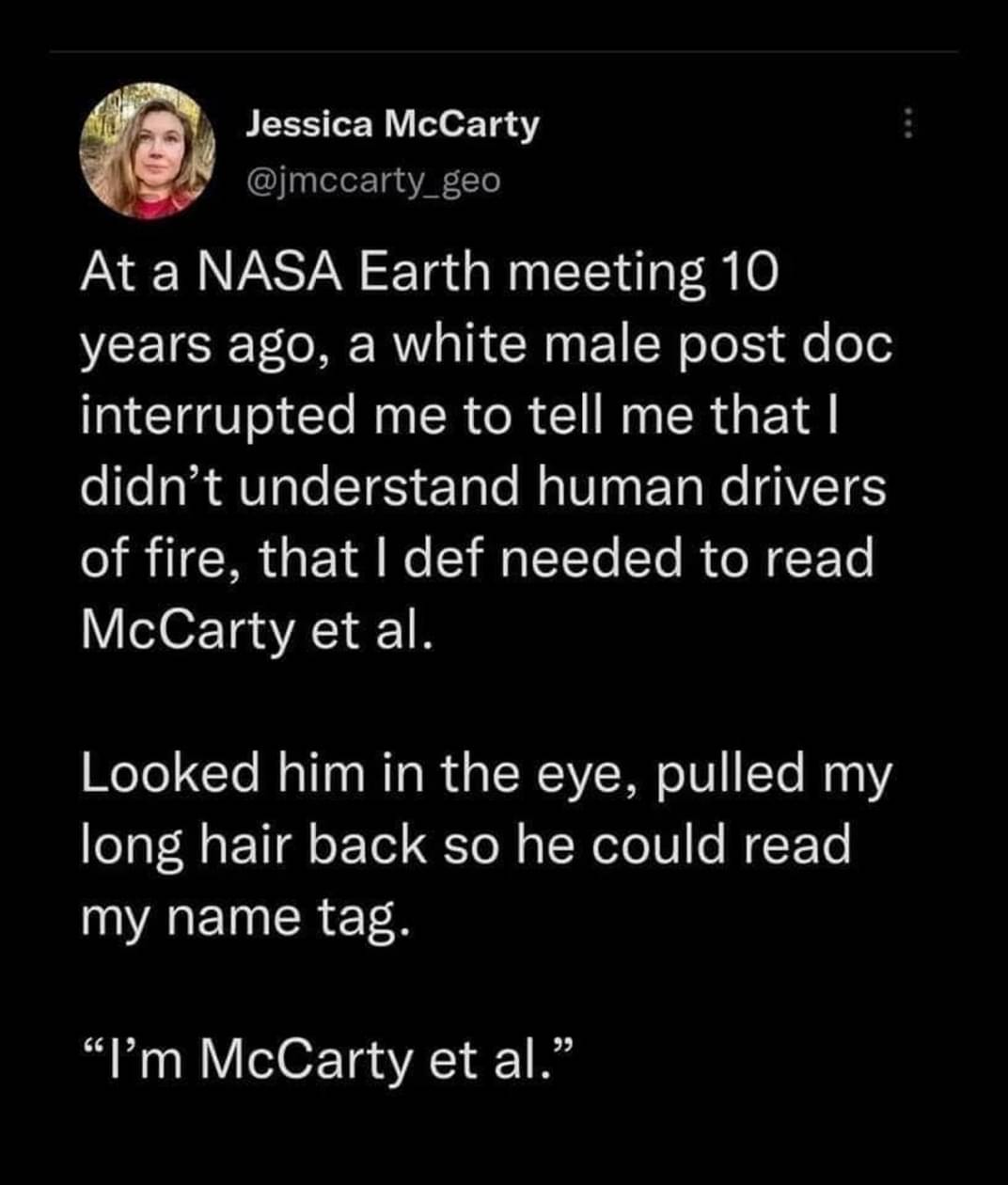
I’m sorry, but you obviously don’t understand wildfires. You should really try reading Tropical Dingdongs, Esq.
Cool! I have no idea what any of that means, but cool! I get the feeling that you really enjoy what you do, and if that’s the case I’m glad for you :3
When you refer to that diagram, is it a way of gauging fire spread risk? Like this grill could start a medium sized fire, and it’s close to a shed which could become big fire, and that could spread to house, etc, etc?
Removed by mod
Well that’s pretty cool, thanks for sharing! :D To repeat to check my understanding, you’re looking at where structures are relative to other structures, their shape and orientation, and how that goes together in a big system to influence general structure survival in a wildfire situation.
Do you foresee the outcome being something where you could “tune” a neighborhood to be more survivable, or would it end up with too many combinations to be viable?
Removed by mod
I’m going to
stealcite this. I guess it’ll be ‘et al et al.’I think the fact every car is white is a feature.