

61·
4 days agoThere’s an empty spot at the bottom of that list and the author – who by the way is a monster – could have easily included Subaru.
Progenitor of the Weird Knife Wednesday feature column. Is “column” the right word? Anyway, apparently I also coined the Very Specific Object nomenclature now sporadically used in the 3D printing community. Yeah, that was me. This must be how Cory Doctorow feels all the time these days.
There’s an empty spot at the bottom of that list and the author – who by the way is a monster – could have easily included Subaru.

Shitpost level reply: Any of the Gradius games.
One of the power ups you can buy is literally to dispense friends (options) which follow you around and shoot alongside you. You can crank out as many as you want, at least within reason. And in some of the Parodius games they are literally little dudes. Or depending on your character, little octopi, cats, or penguins.
Katamari Damacy
Which typically culminates in rolling up everyone on Earth by the time you get to the final stage, no less. If that’s not a group hug, I don’t know what is.
Edit: I’m also going to second the Psychonauts recommendation, especially the second game. Despite the gameplay itself inevitably lending itself to the protagonist performing every little bit of work by himself, there are strong themes of teamwork all throughout the game’s story and the excellence of its final sequence cannot be understated:
Ding dong.
Whale-O-Gram.
This is one of those things that sounds simple and intuitive on paper (“just” take all these communities of the same name from disparate instances, smash them together so they all display on the same page) but once you start thinking about the details it becomes clear that it’d be a logistical nightmare and a clusterfuck to actually implement.
For a start, moderation would become diabolically complex.
I think the only way this could possibly work at present is if were client-side, i.e. you can create your own supercommunity by merging content into a single page on your own device, but purely for display and in a read-only fashion. This would not provide the implicit benefit I think you’re angling for, though, which would be solving the Fediverse fragmentation problem.
[blows dust off of cover]


Malicious actors are getting USB drives to autorun somehow. If they’re not using built in Windows capabilities, they’re engaging in shenanigans emulating HID inputs over USB or something.
All I know from personal experience is that modern Windows will not autorun a CD anymore, even though up until XP it would.
Obviously no one’s seen it happen first hand. It’s a projection based on what’s known about the materials and how they’re made. Burned CD-R’s have definitely been out in the real world for people to learn how short their lifespans can be, though.
Nobody could “prove,” for instance, that the Voyager 1 could stay operational in deep space for 47+ years when it was launched in 1977, but the engineers could still predict and they launched it anyway, and it did. I don’t think your argument really holds water.
Don’t conflate a mastered CD with an aluminum data layer with a recordable CD-R or CD-RW, which use organic dyes that have a significantly shorter lifespan.
A properly manufactured CD can last 200+ years if it’s stored in a dry environment free of UV exposure and high levels of moisture.
Even a quality CD-R can’t really be expected to retain all of its data integrity for much more than 10 years.
Sony shipped fucking root kits on their CD that would hijack your PC and screw with backup software.
Worse, this thing from Sony was on music CD’s and not even games.
The Sony Rootkit debacle is one of the reasons that I still will not do business with Sony in any of its guises, for any reason, no matter the price. And believe me, I have a long memory.
95, and they disabled it circa Vista because it was obviously a stupid idea.
Ironically, this was originally only for drives that reported themselves as optical media (CD/DVD), but now modern versions of Windows actually won’t autoplay an immutable commercially pressed CD, even if it has the correct autoplay.inf file on its root directory structure, but somehow it will autorun things on a flash drive which is a medium explicitly capable of being fucked with by a malicious actor.
Because that makes sense.

I prefer to just refill cartridges rather than try to use the converters. I have a small mountain of converters for all kinds of pens, all of them originally pack-ins with the pens themselves, and I’ve never used any of them.
Converters are full of seals, gaskets, and moving parts. All potential points of failure. A cartridge isn’t. You can just refill it with a syringe and be on your way. For me, at least, I have the luxury of never being in a situation where I’ll conceivably ever do enough writing in a day to completely run a pen dry, so I don’t have to carry spare cartridges and thus don’t need to jigger some kind of way to reseal them.
Many of my pens still have the same cartridge in them they originally came with. Some, like my Sheaffer Targa, have a cartridge in them that’s easily decades old. No sweat.
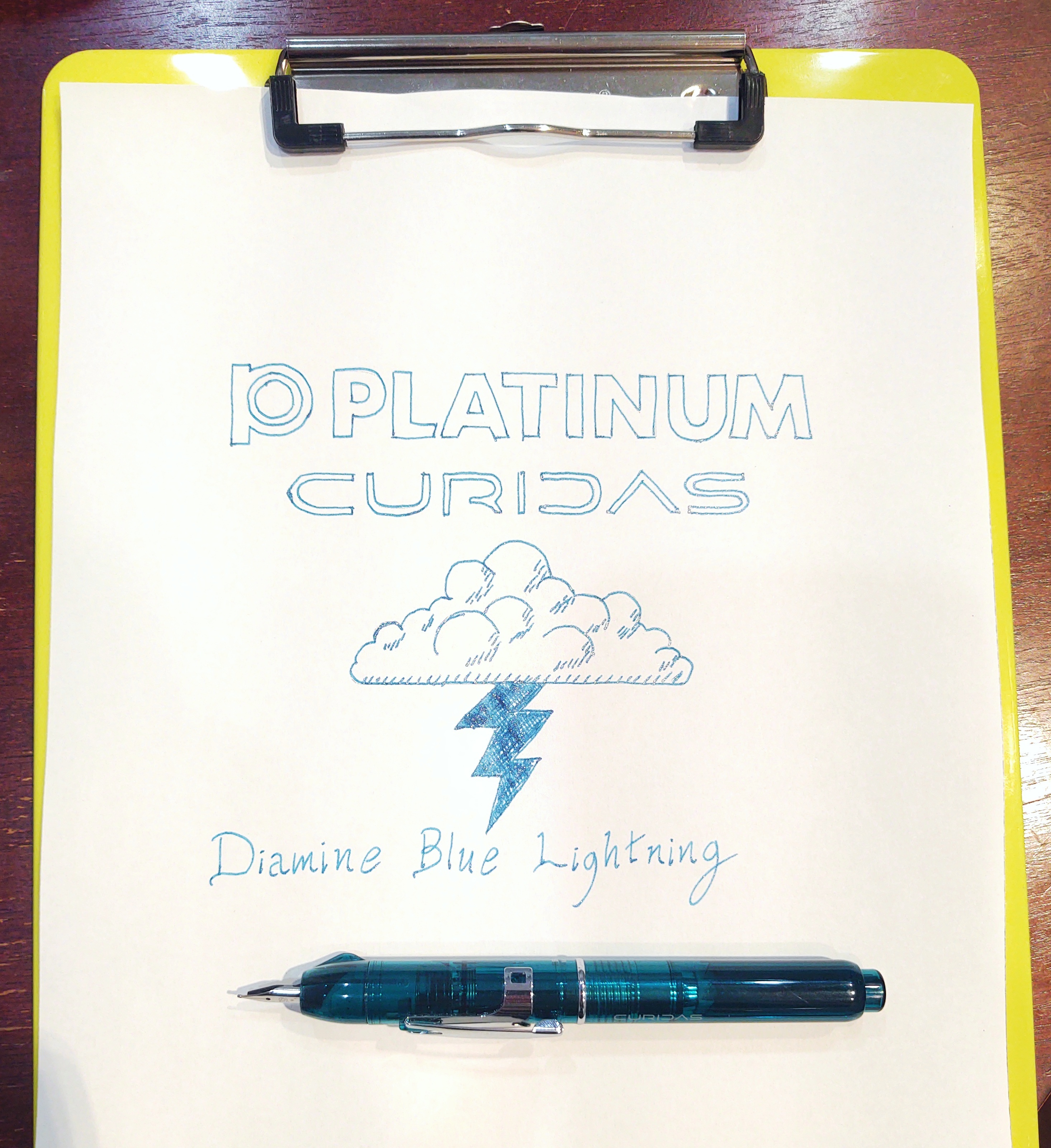
Also, it’s usually a good idea to flush out your nib and feed when you change brands of ink. It’s possible, albeit unlikely, that some combination of ingredients in ink A could react poorly with ink B, and gum up and cause a clog.

I have no idea what you’re talking about, says the chump who has a series of precisely 103 formulaic knife reviews posted here.
Correct.
I still have a 1080Ti in one machine and it definitely does not support RTX of any stripe, on any OS.
This one annoys me almost as much as “overdrive.” And Intel was guilty of that one, back in the 90’s.
That word does not mean what everyone thinks it means…
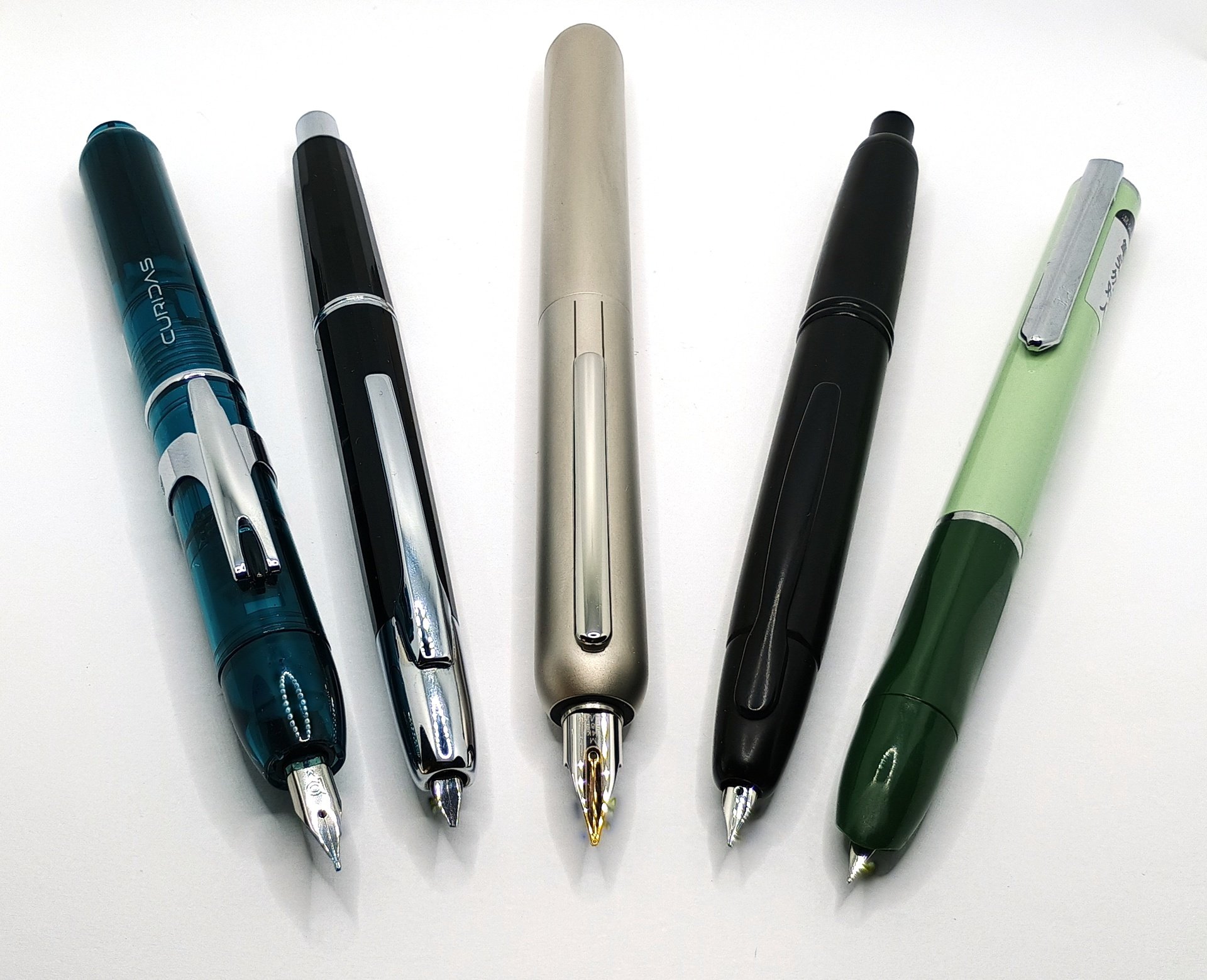
Consider the Lamy Al-Star. Specifically not the Safari, not that there’s anything wrong with the Safari, but the Al-Star has an aluminum body and cap and feels much nicer in the hand. $47.
Genuine ones have a press-on cap. If you got one with a screw-on cap, what you actually have is a counterfeit from Wish.
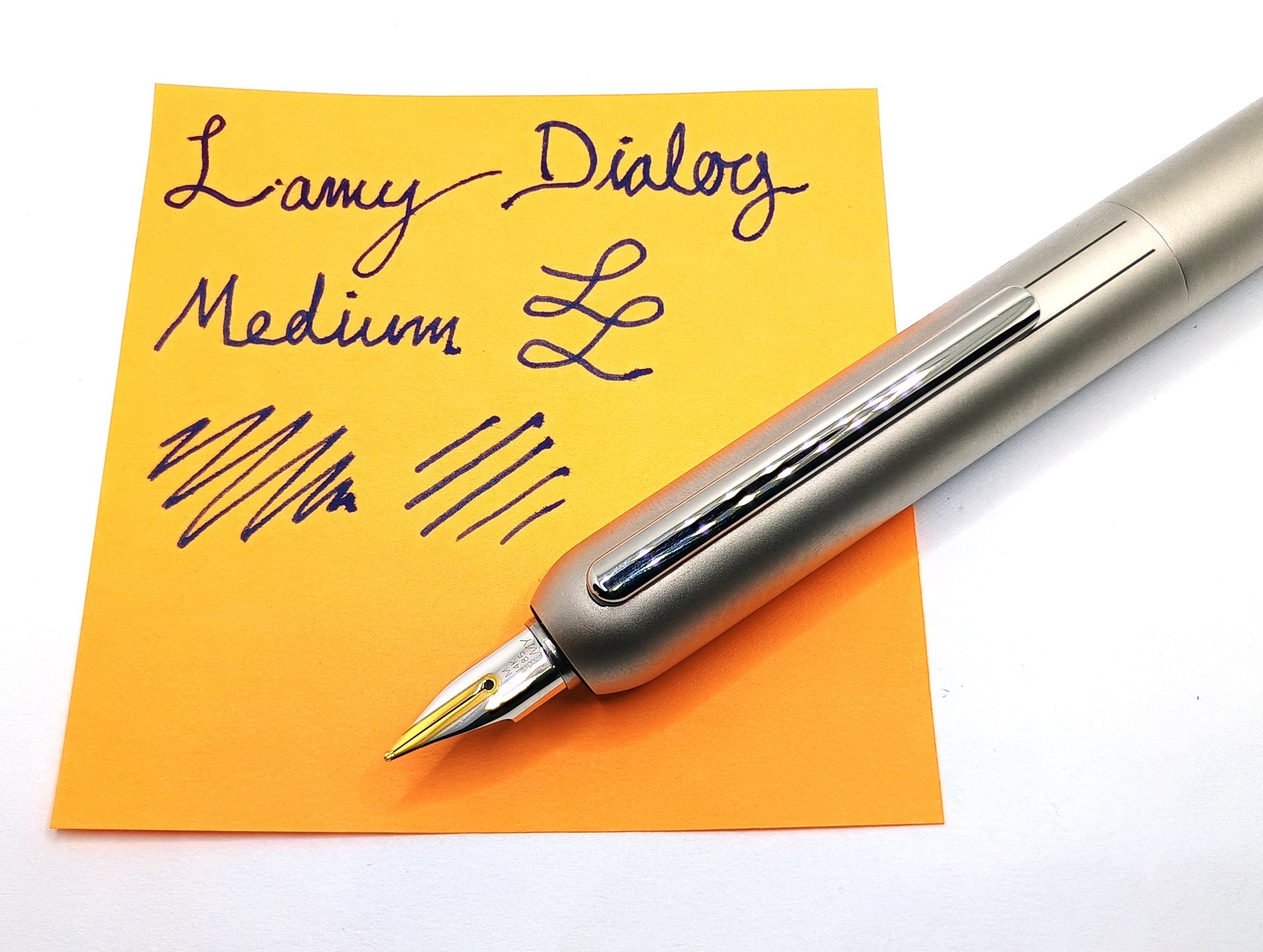
Lamy pens are nice in that the nibs are easily user interchangeable, so if you decide that whatever your pen came with doesn’t tickle your fancy you can just spend a couple of bucks on a different one. Various widths (“grades,” in Lamy parlance) are available, as well as italic and oblique nibs, and also fancy premium gold ones, and their flexible spring steel variant. Any Lamy nib will fit any Lamy pen, which either provides you flexibility or locks you into their ecosystem, depending how you look at it…
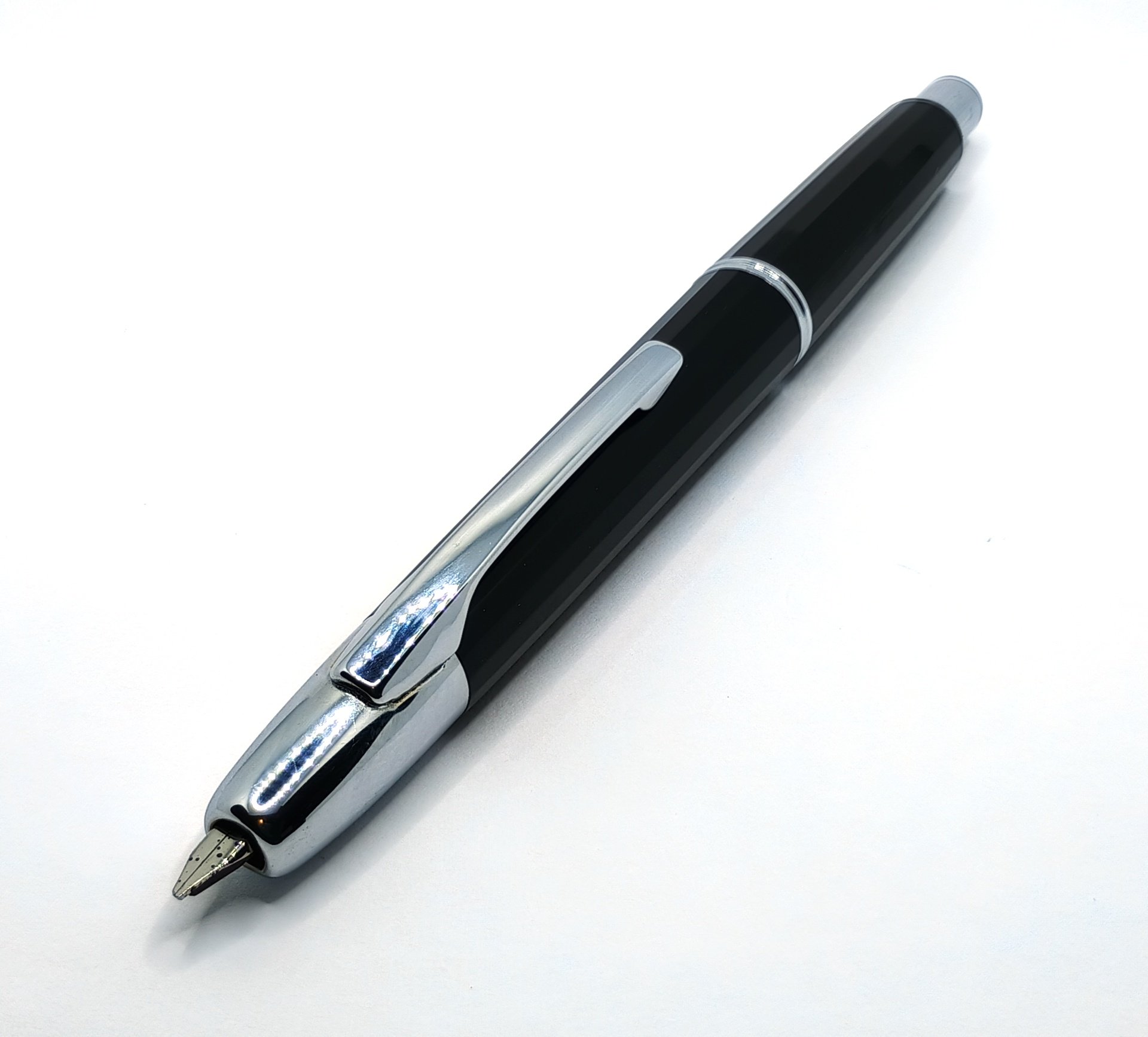
The Pilot Cavalier is another option I can recommend. It’s all metal, slim, well built, and comes with a snap-on cap. $58.
I would wager someone with an MBA got their knickers in a twist about “PC being the most pirated platform,” did that thing like in cartoons where the dollar signs in their eyes turn into cents signs instead, and decided to just 86 the whole thing because they were deathly afraid that a couple hundred people who never in a million years would have paid for it in the first place would download it off of Kazaa or whatever was popular back then instead of giving Rockstar any money.
Just a guess.
In that vein, maybe Power Washing Simulator?
The new port is not perfectly fine if it randomly crashes to desktop all the time.
Oh, and I also forgot to mention that several of the achievements are still bugged and don’t pop, which has been a known issue since release and still hasn’t been fixed. So yeah. Bethesda is gonna do Bethesda stuff.
You can still have a “vanilla” experience using other source ports. That’s what, e.g. Chocolate Doom is for. Except it may stay running on your PC for more than eleven consecutive minutes at a time. So if that’s what turns your crank, go for it. You’re right – not everything needs to be GZDoom and Brutal. But other options definitely exist, and I recommend any of them over what was shoveled out officially. You can even have a pretty durn vanilla experience in GZDoom if you want to, while still retaining much broader support for mods than the official release. Me personally, I can’t do mouse control with no vertical look. It made me seasick in the 90’s, and it still does now. That’s a deal breaker. I was a keyboard-only player in the DOS era.
I will also add that if you are going to play the new Sigil expansions or Legacy of Rust, they’re virtually impossible on Ultra Violence and Nightmare without mouselook. These maps were clearly designed with a modern source port including mouse aim in mind, and this was apparently shitcanned later in development for some unfathomable reason. Like, why even leave the crosshair there, then?
Like, the shoot-the-switch secret on Legacy of Rust MAP10? Forget it. Yeah, you can hit it like 3% of the time if you ride the elevator up and down and pick at it with the pistol until you get it. I’m quite certain it was intended to be shot from either of the windows left and right of the elevator, the leftmost one lining up with it perfectly, and the elevator thing is only just in case someone is playing in some kind of purist mode.







I think this one can be summed up as the old, “The nail that sticks up gets pounded down.” I don’t think it’s really any deeper than that.
Behave or exhibit yourself in a way that people don’t get, and the response from some is to just get irrationally angry and/or stupid about it. Logic does not apply.